Showcase Feature 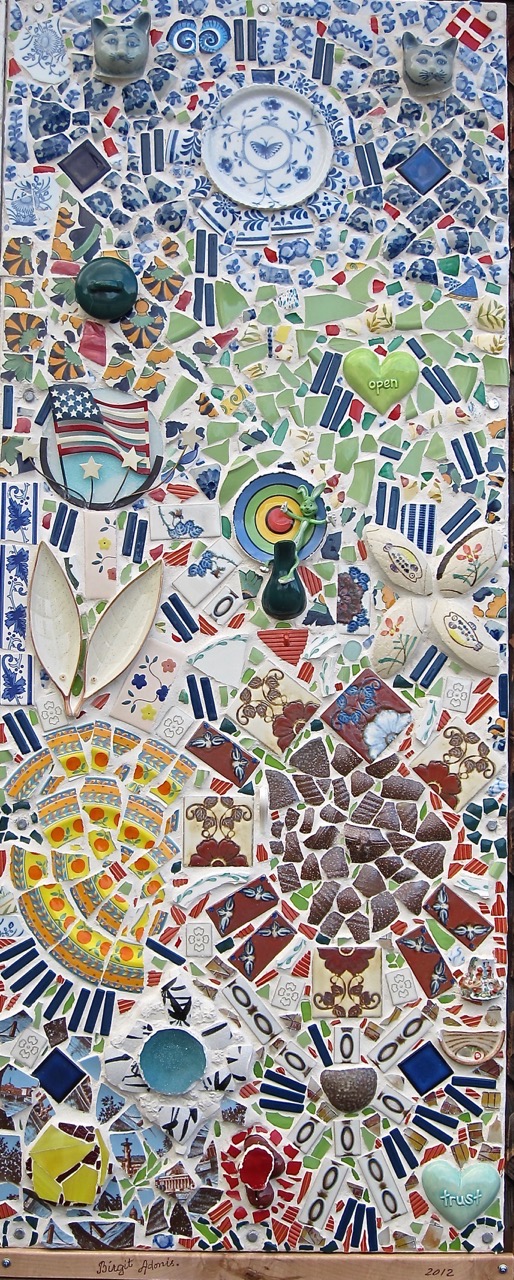

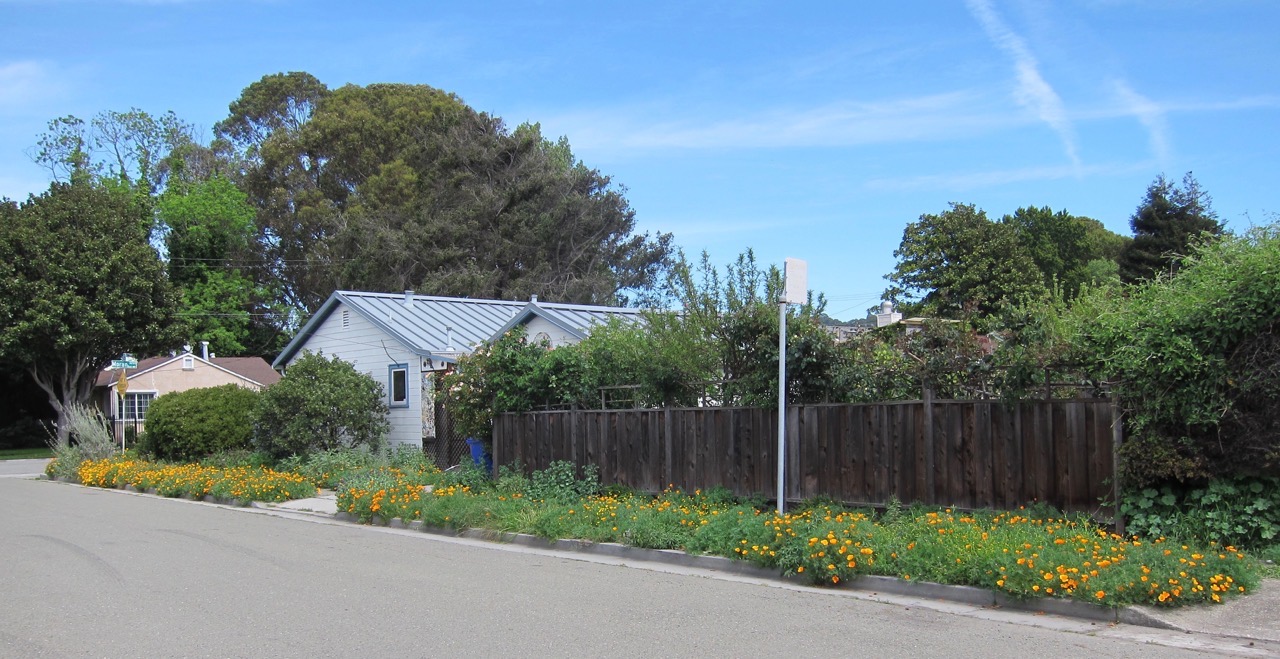
- Read Anni’s essay The Garden Before Us which describes the history of the garden site since 1750.
- Ask about the fruit-tree watering Laundry to Landscape greywater system
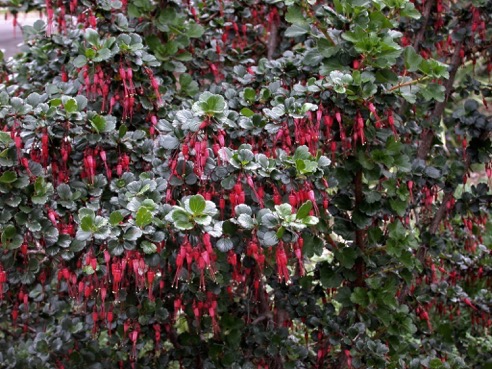
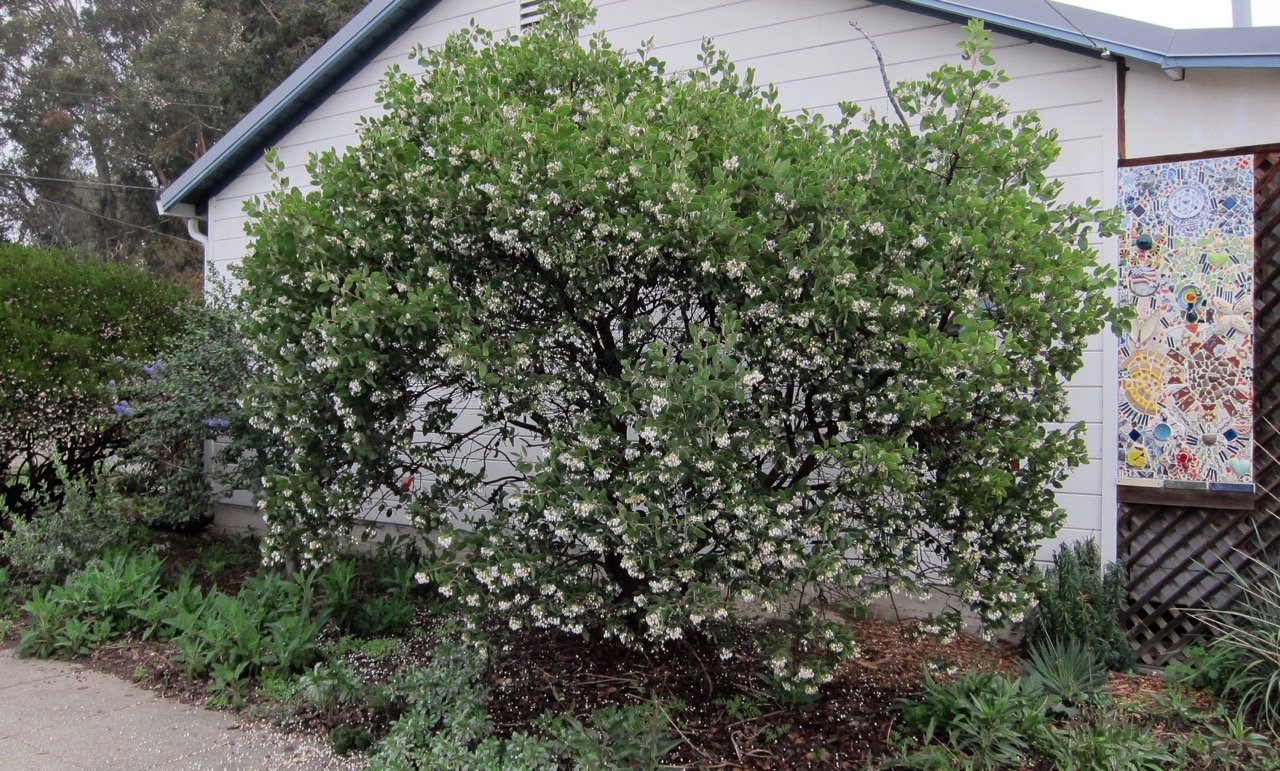
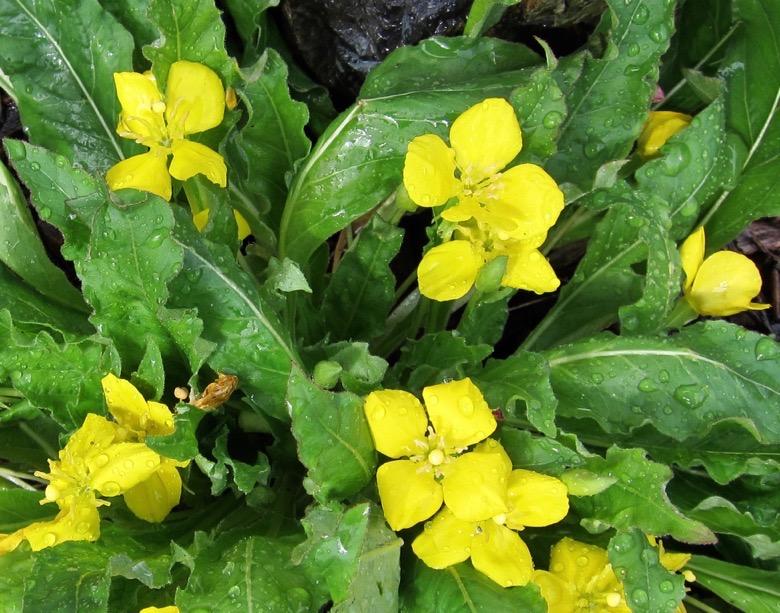
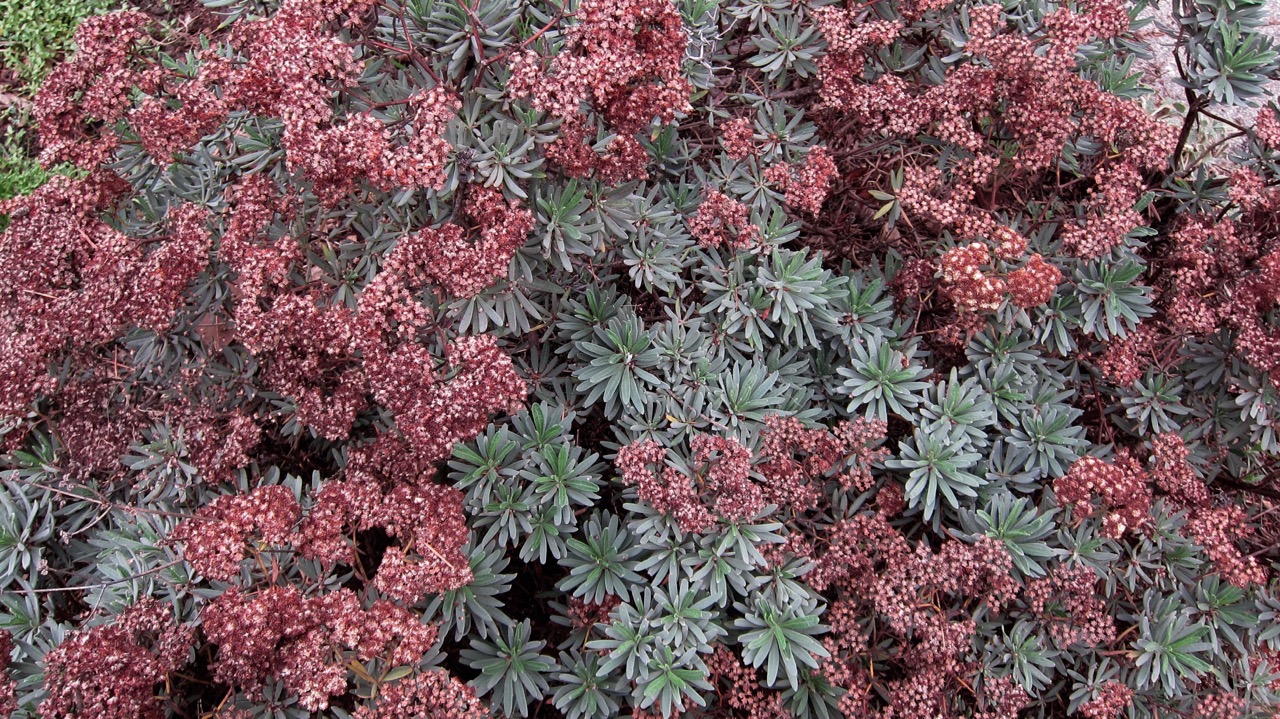
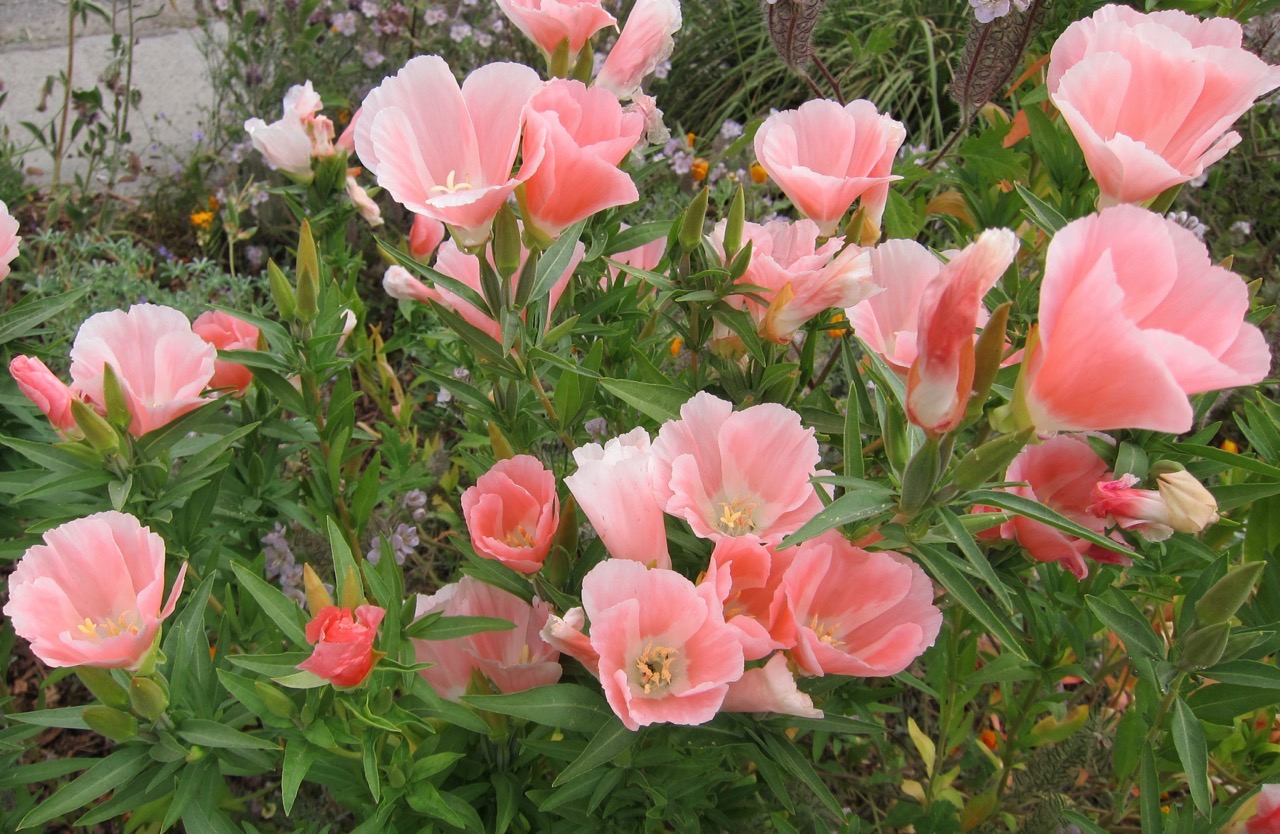
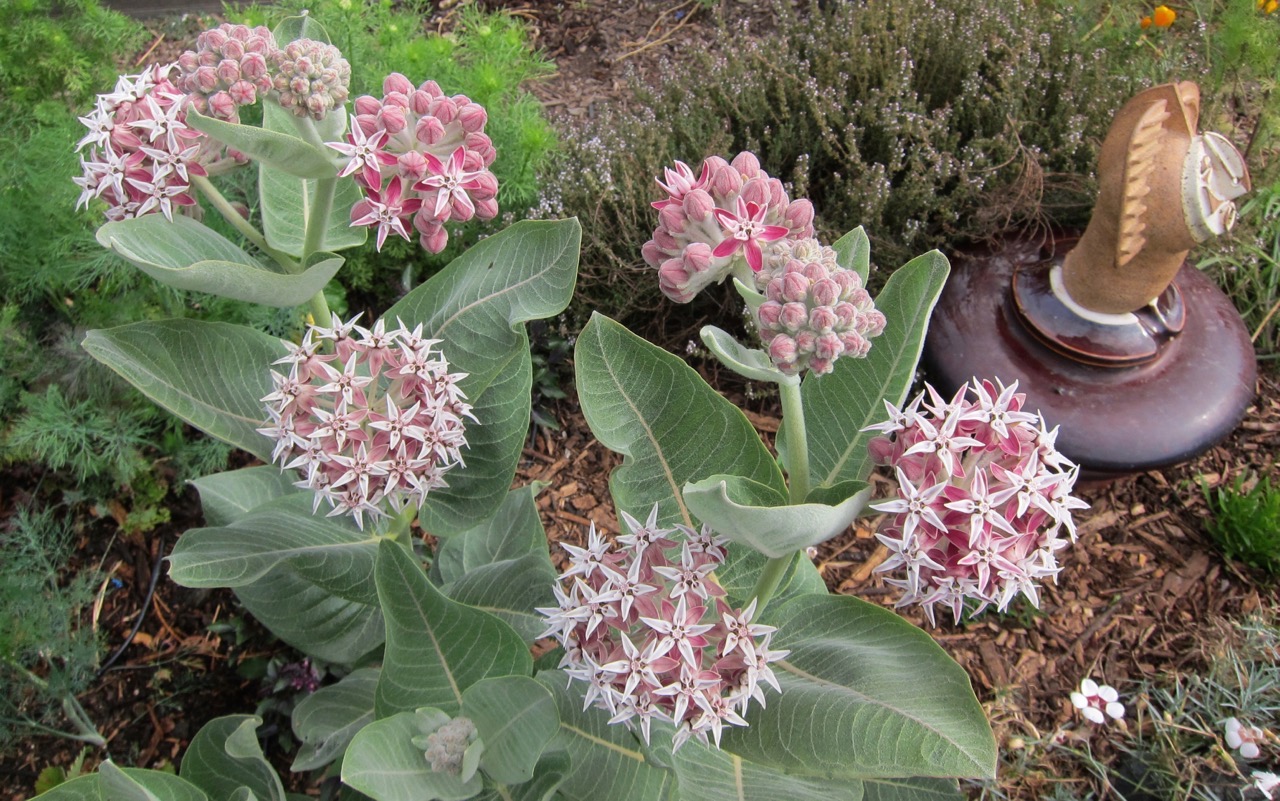
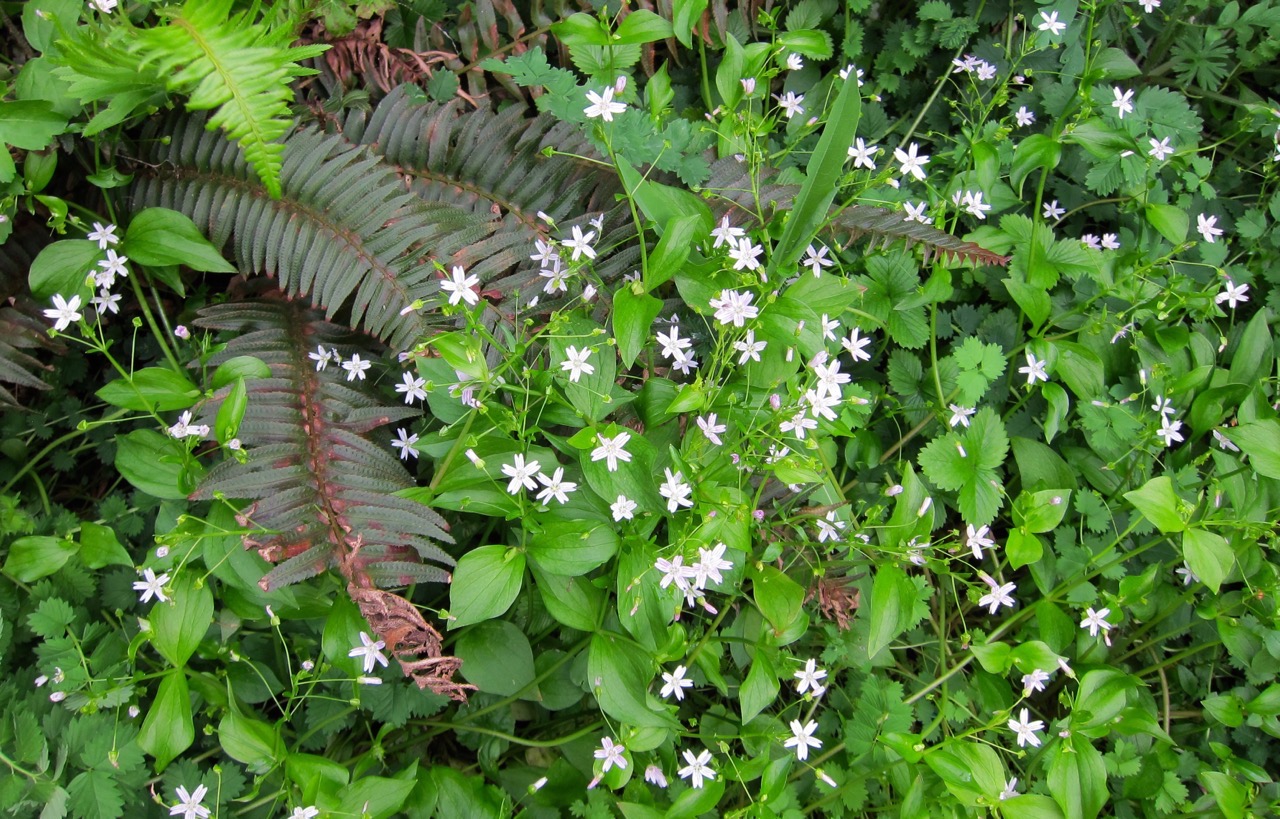
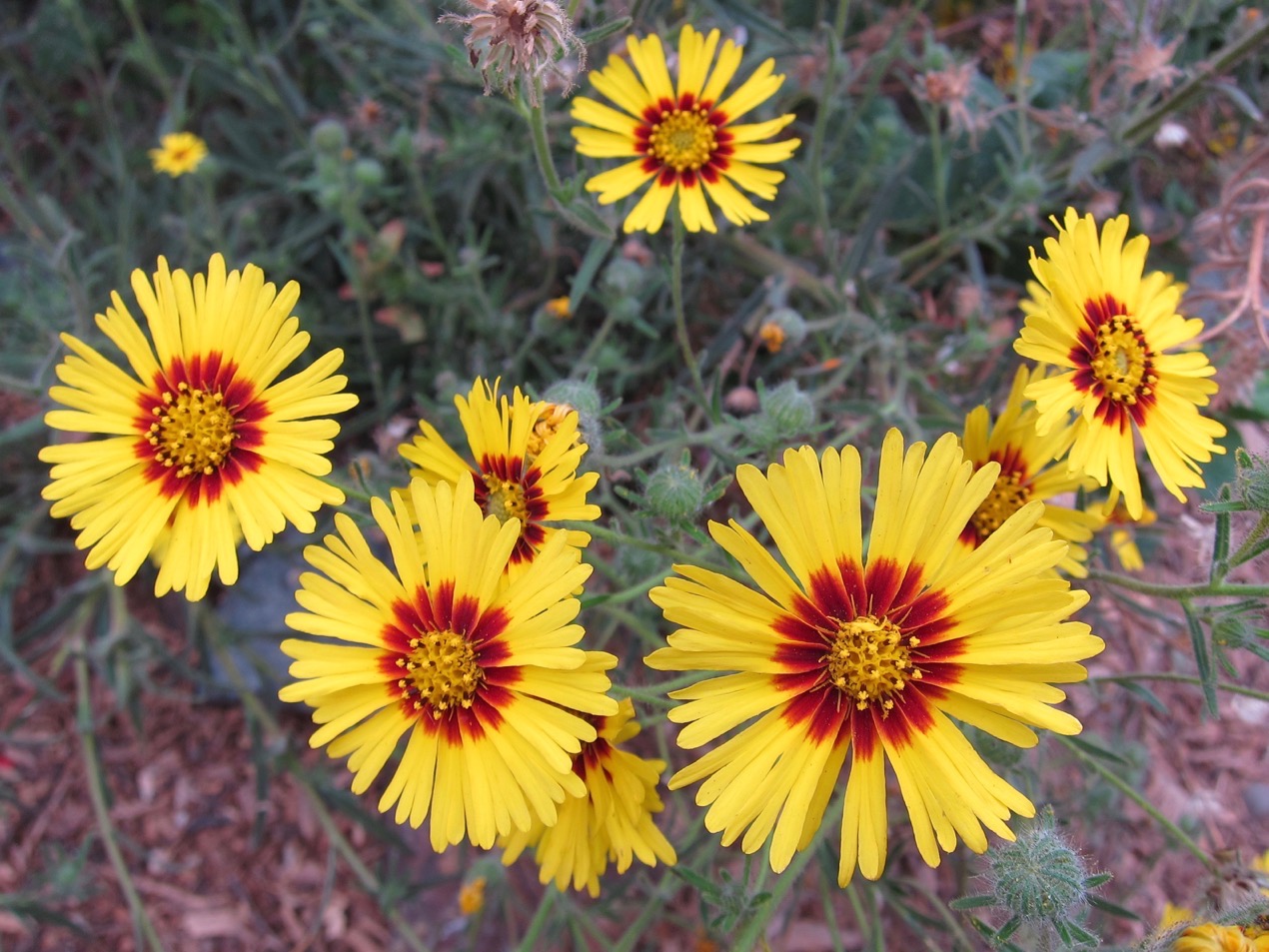
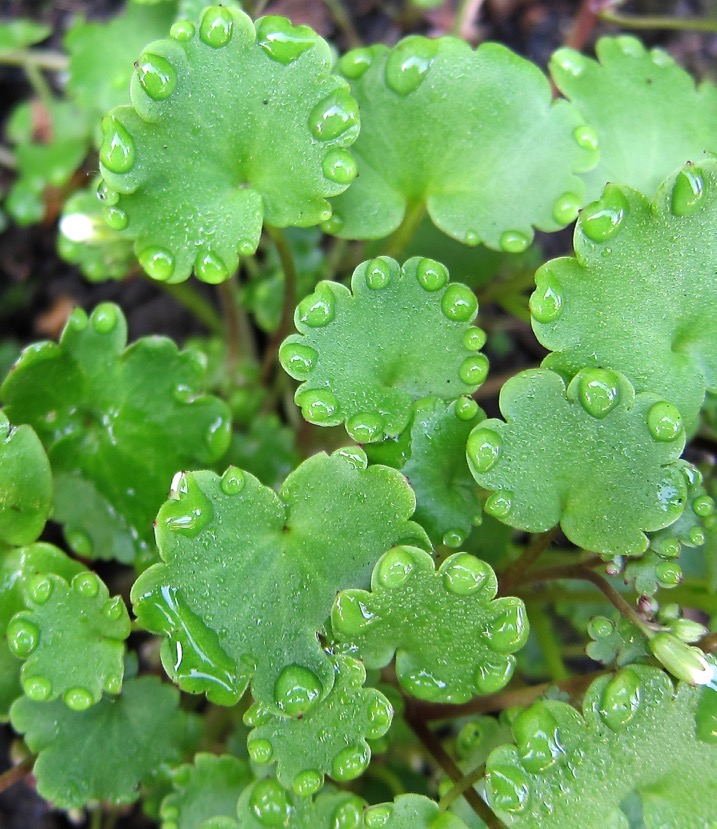
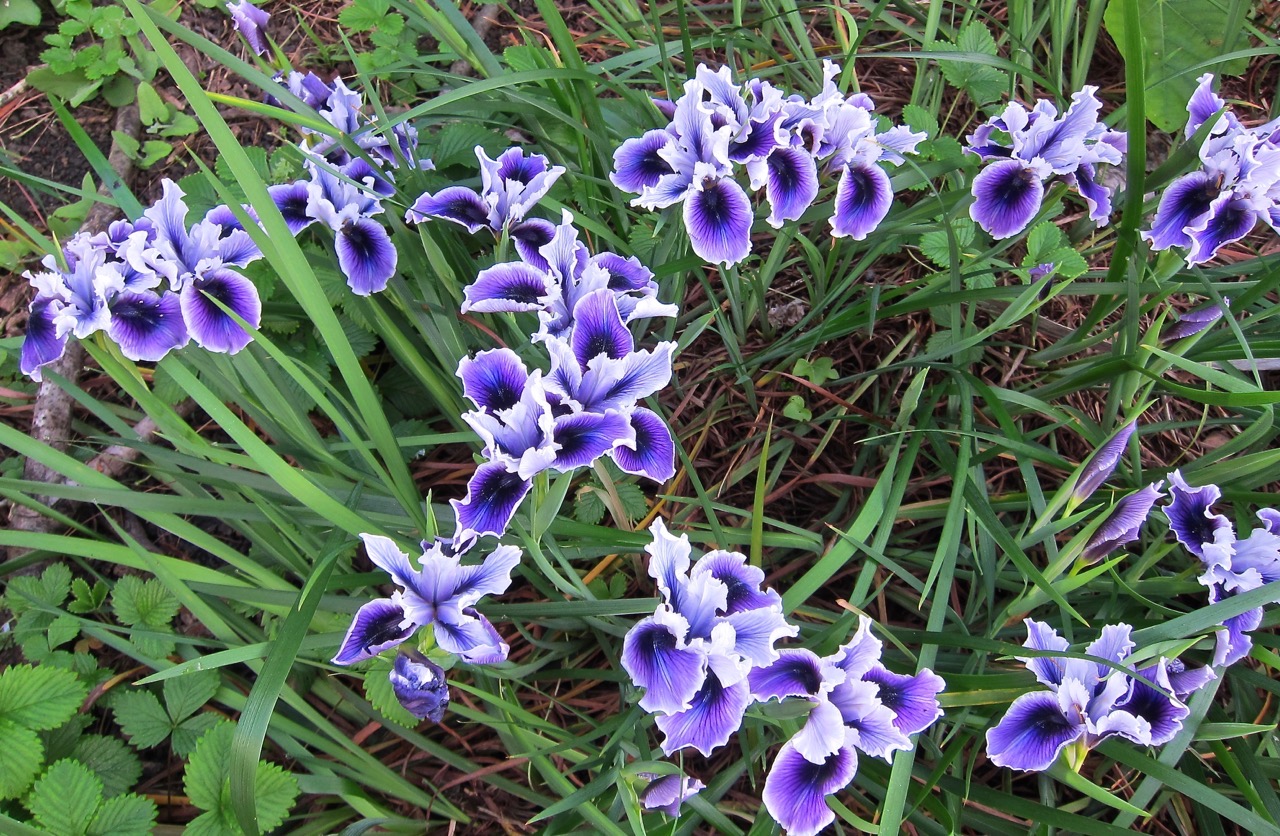
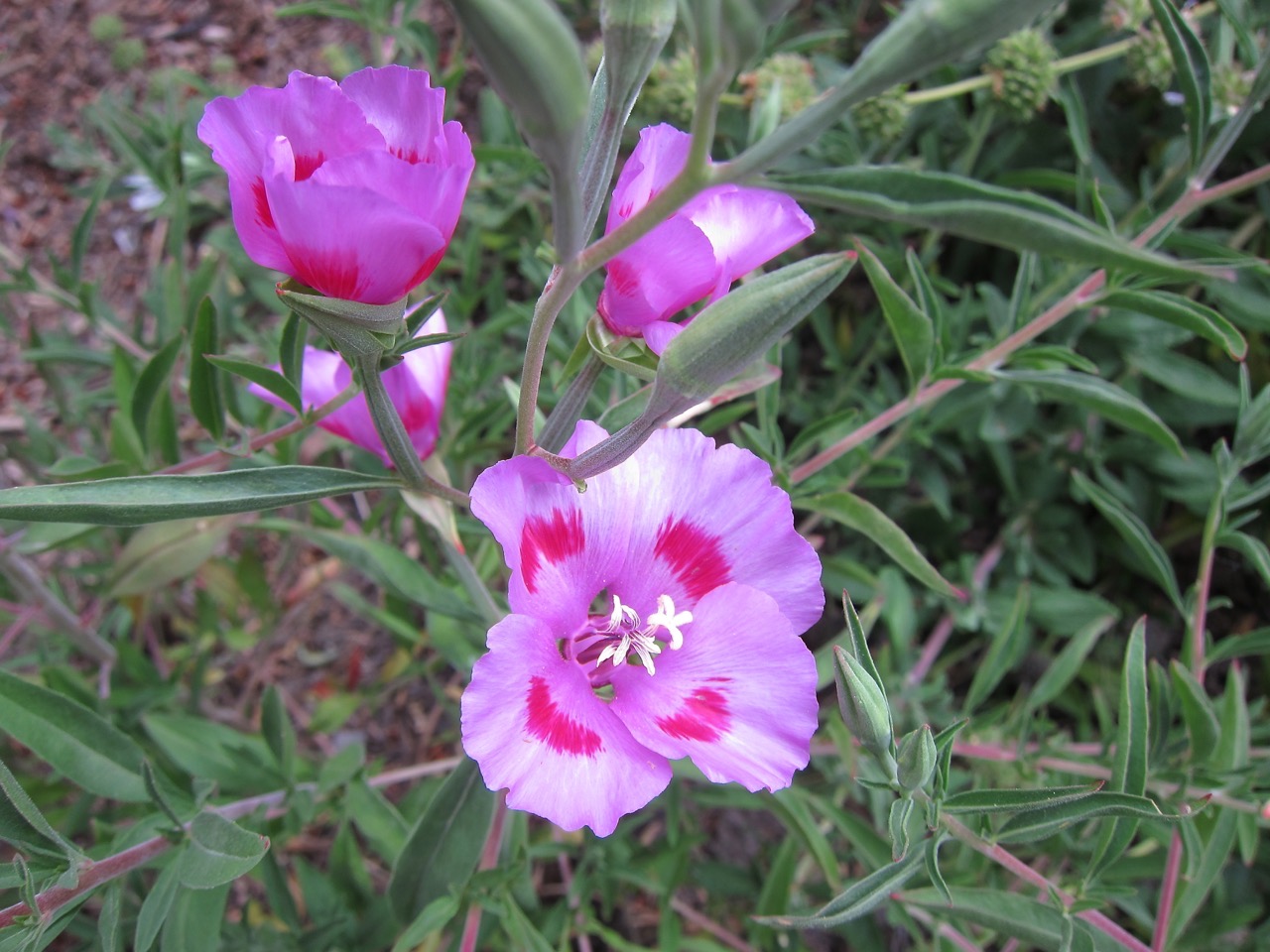
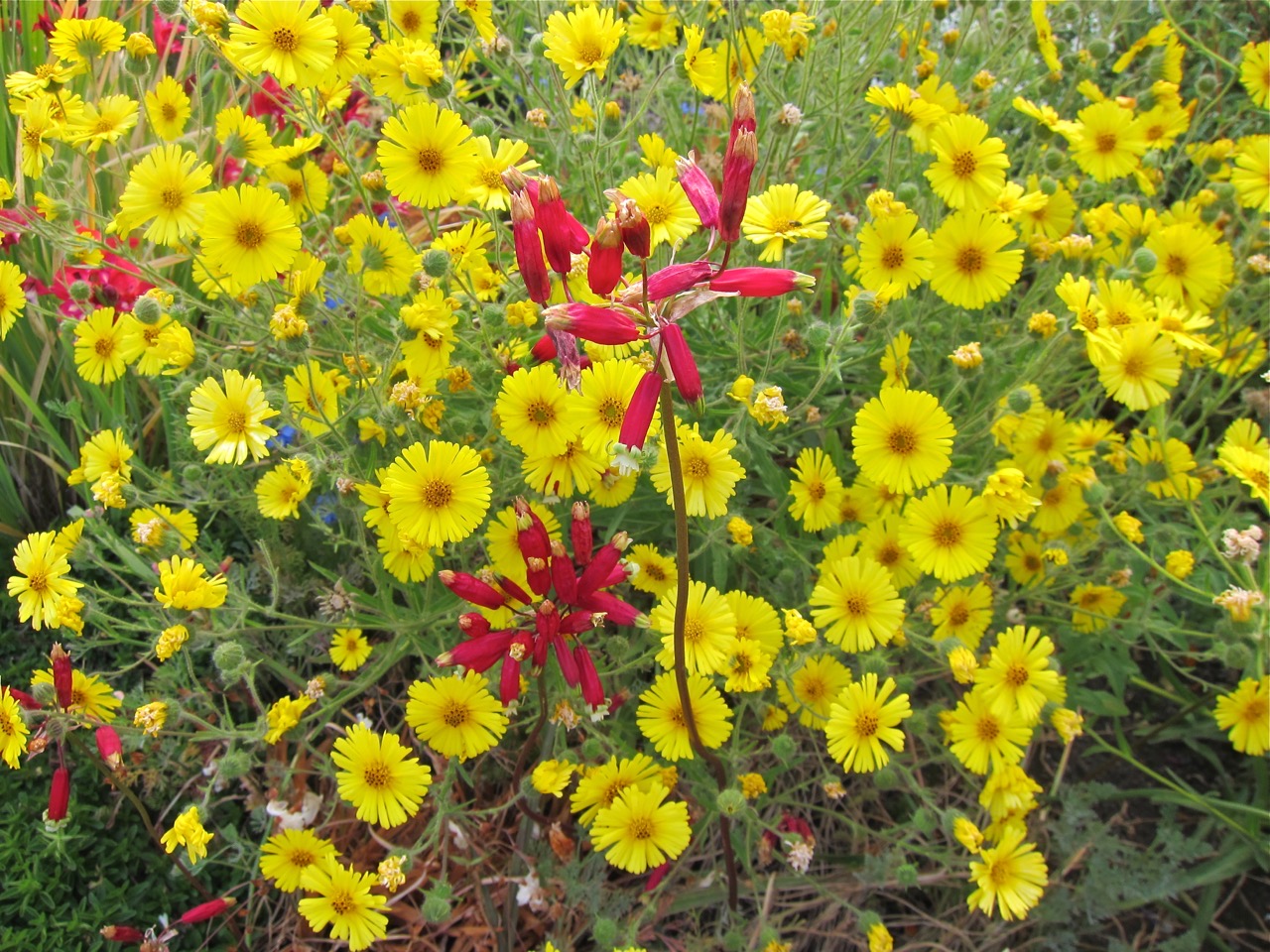
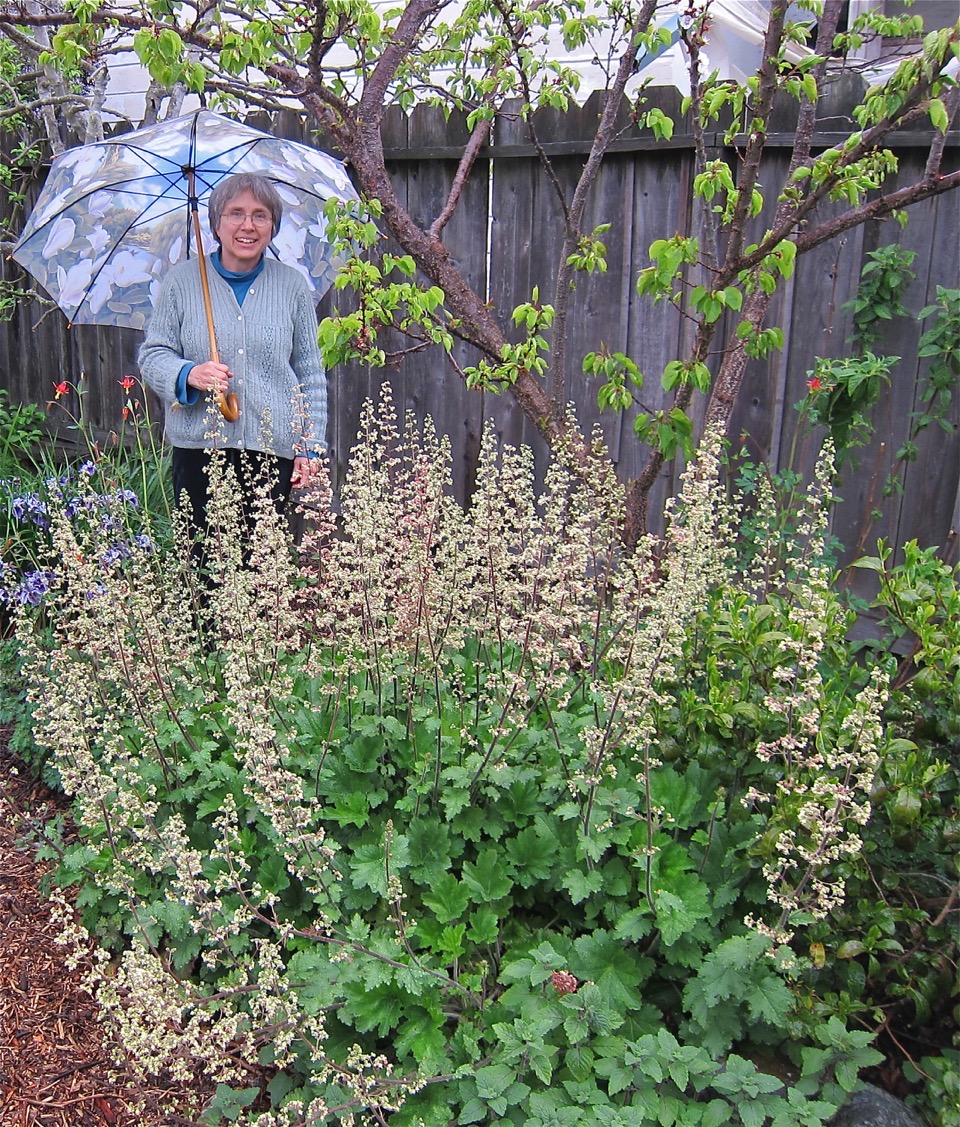
- To see photographs and find out more about Anni and Carol’s top pollinator plants, favorite fragrant plants, all of the native plants they grow, wildlife, art in their garden, and more, see PlantsMap.com.
- You can also access information on the plants from QR codes that will be found on the garden’s plant labels on the day of the Tour.
Gardening for Wildlife
Butterflies and leaf cutter, bumblebees, green sweat, and carpenter bees, as well as many types of birds, have been seen in the garden, drawn by the multitude of nectar and pollen producing native flowers, tall shrubs that provide shelter, and the bare patches of ground left for native bees to nest in.
Talks in the Garden
3:00 “Native flowers and foliage for fragrance” by Carol Manahan
Music in the Garden
11:00 Start the day off with a morning raga on sitar and sarod, performed by Richard Morrison.
Art in the Garden
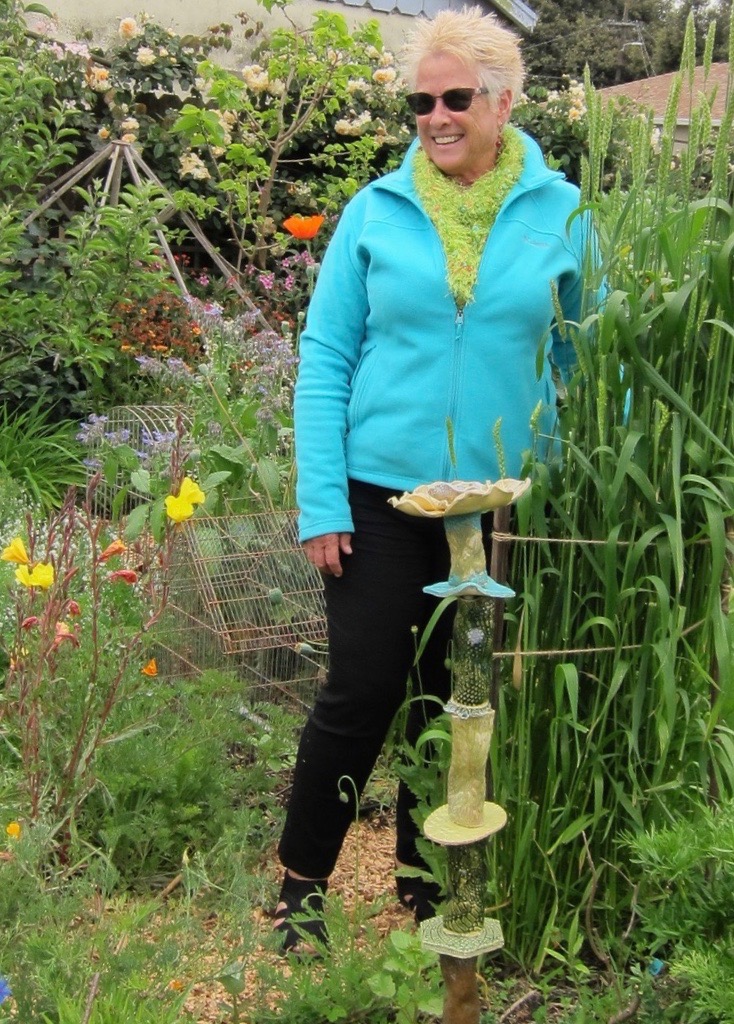
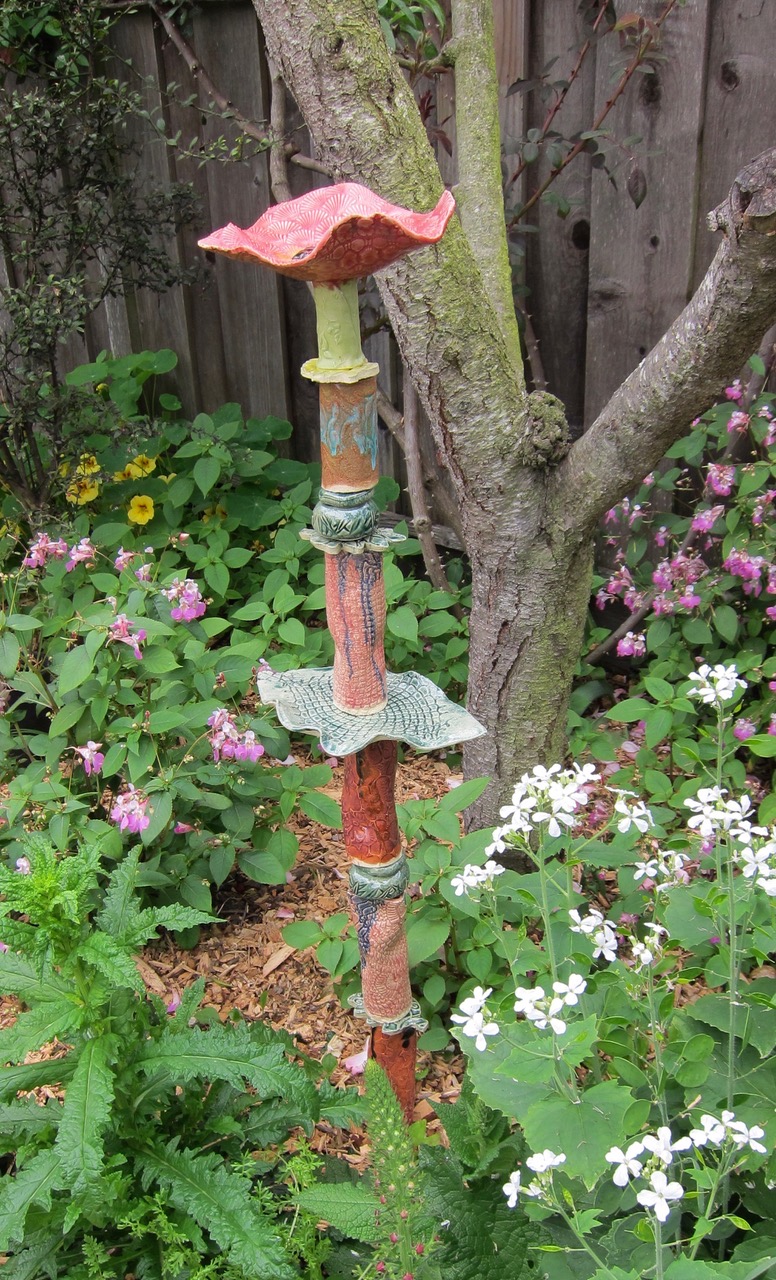
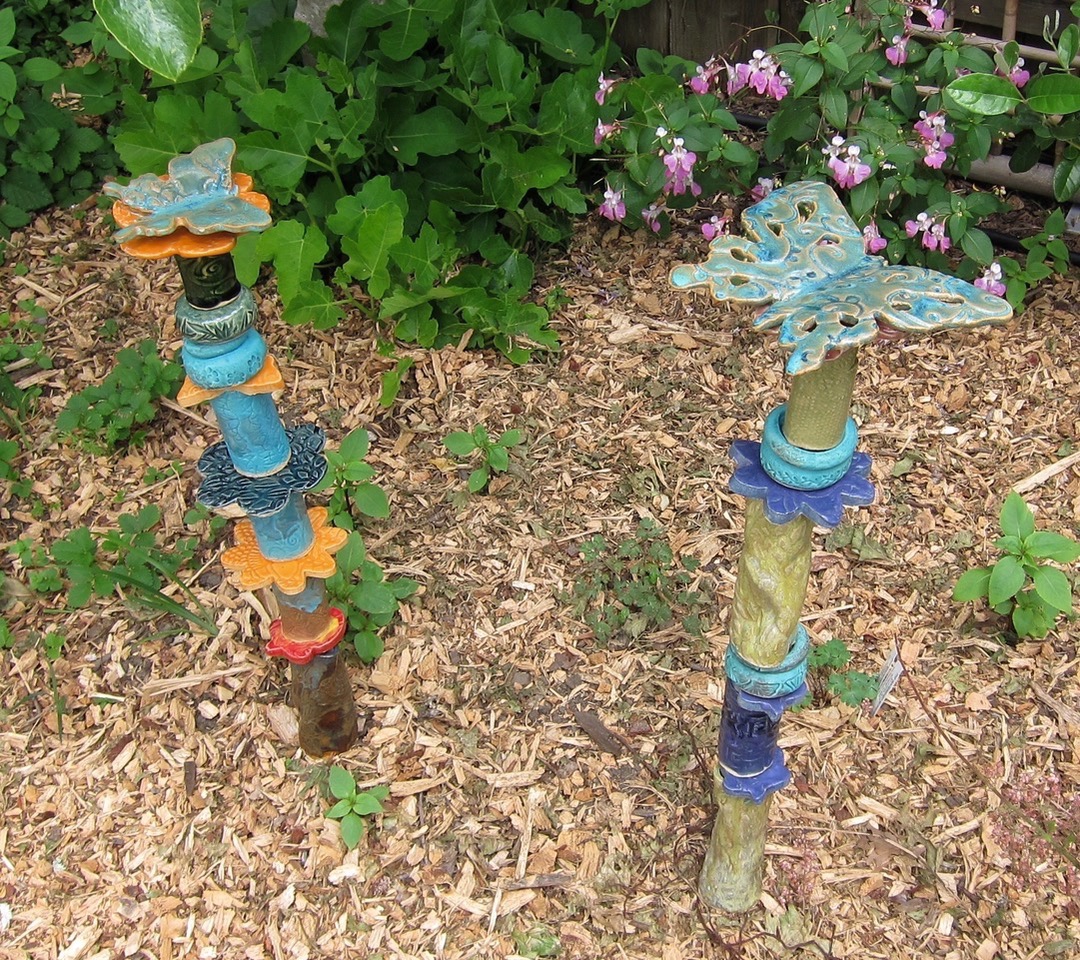
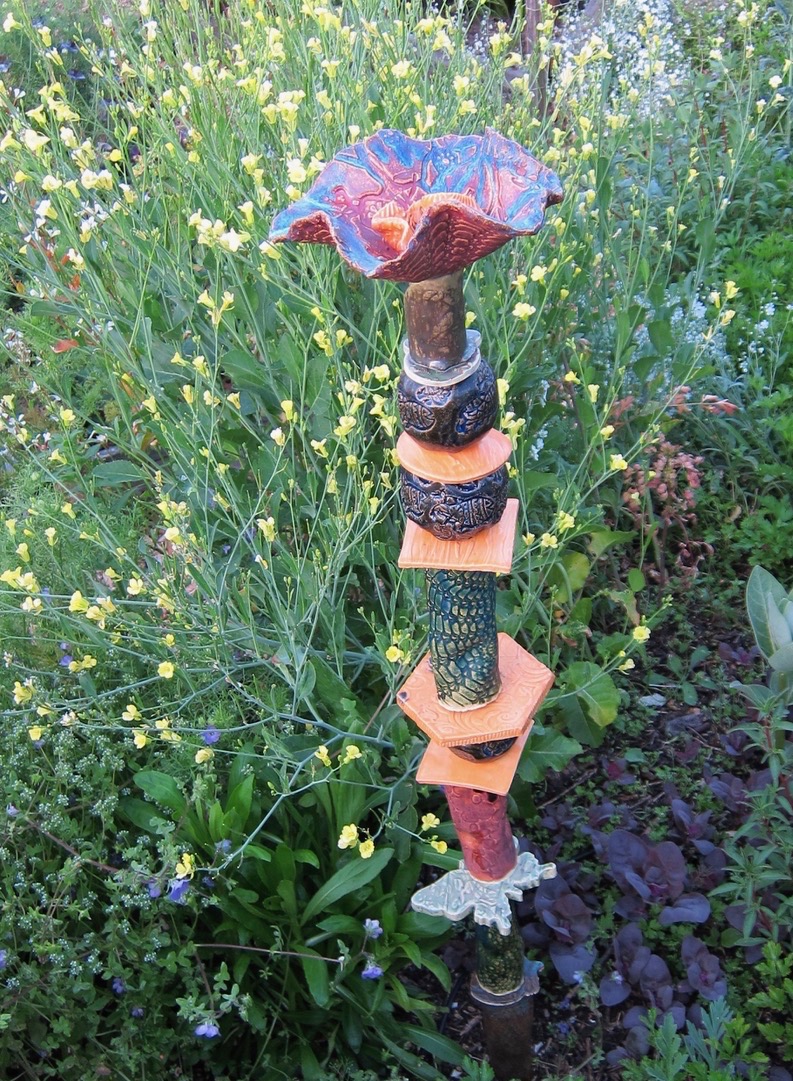
Christina Barrett will sell her whimsical and colorful ceramic garden art “bamboozles”.
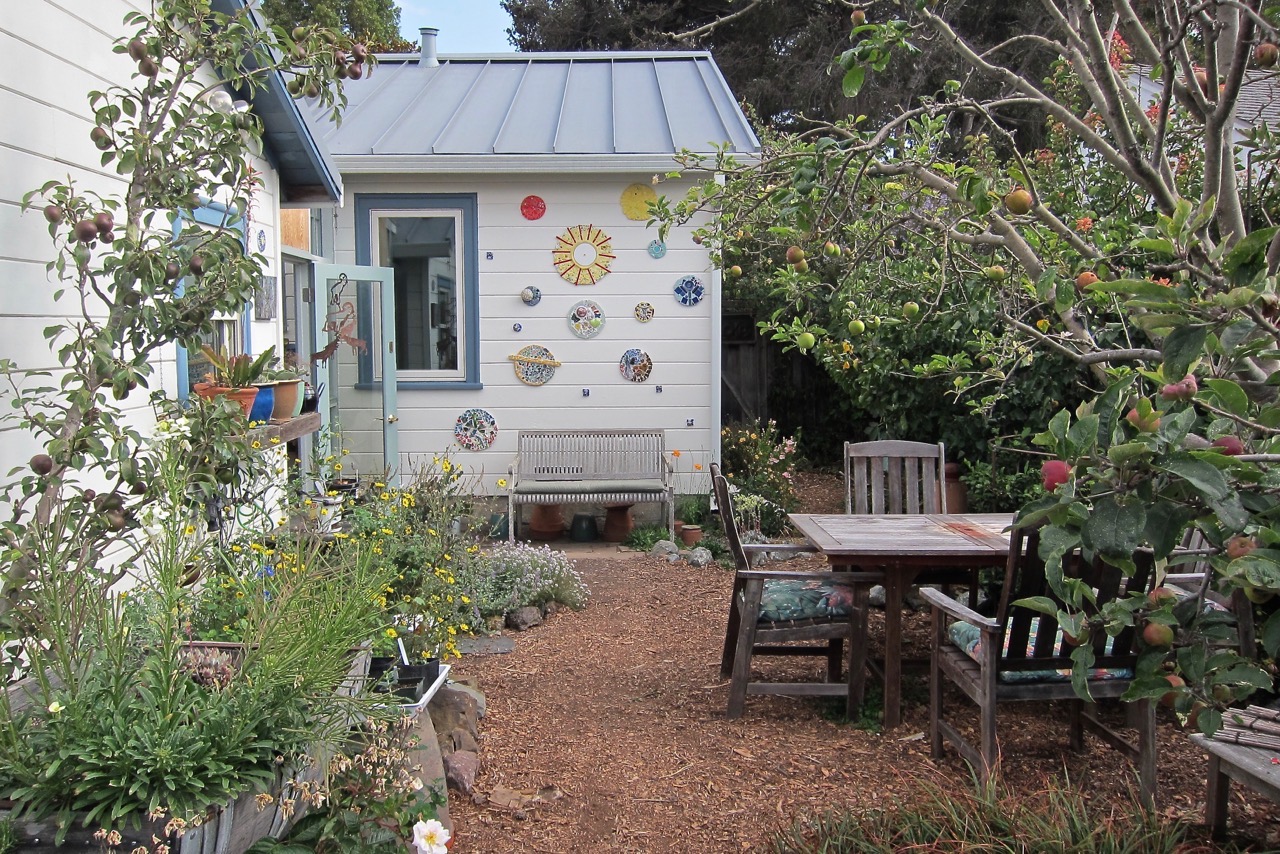
Don’t miss the new ceramic pipevine step decorations and handmade glazed tile tabletop, with its impressions of six native plants, the hammered garden gate copper relief sculpture, and soldered copper pipe trellises, all made by Carol.
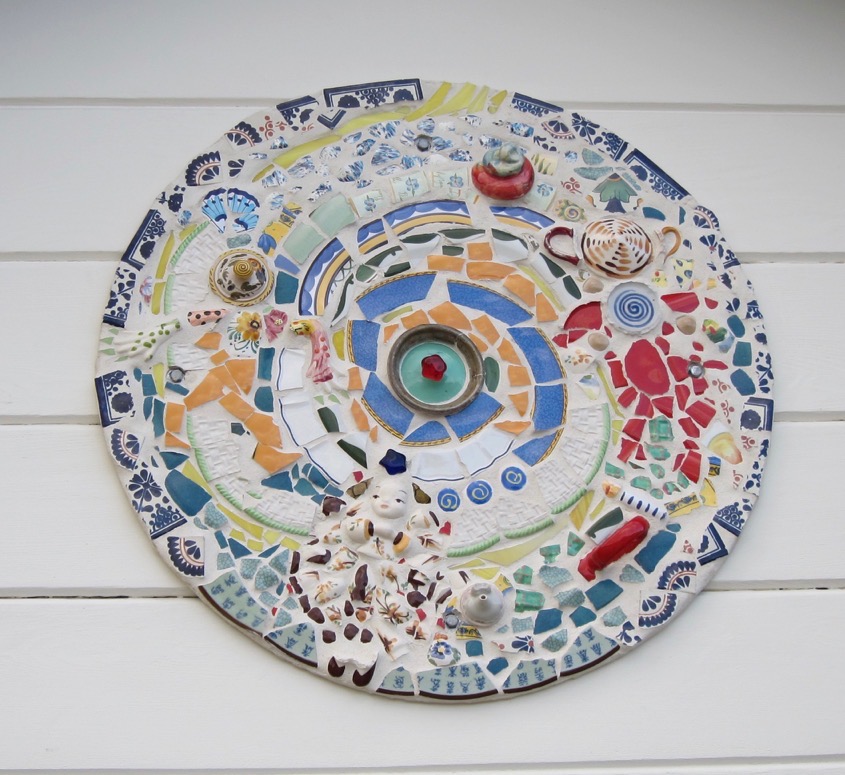
The three colorful mosaic wall pieces, including a series on the planets, were created by Anni’s sister, Birgit Adonis, from broken dishes donated by friends.
Photos
Click to see as a slideshow: